
Standing Seam vs. Exposed Fastener Metal Roofing: 7 Key Advantages
Updated: Aug 28
Metal roofing has become an increasingly popular choice for residential, commercial, agricultural, and industrial buildings. Within the metal roofing market, two of the most common systems are standing seam roofing and exposed fastener roofing.
Both systems have their place in the market. Exposed fastener panels are often an economical and practical solution, particularly for agricultural and utility buildings. Standing seam systems, however, offer several advantages for building owners looking for long-term performance, aesthetics, and reduced maintenance.
Understanding the differences between the two systems can help contractors, architects, and building owners choose the right roofing solution for their application.

What Is Standing Seam Roofing?
Standing seam metal roofing uses panels with raised seams that connect adjacent panels. Depending on the system, the panels can be attached using concealed clips or other fastening methods, keeping the primary fasteners hidden beneath the seams.
The panels are typically rollformed from steel or aluminum coil and can be produced in long lengths, reducing the number of horizontal joints across the roof.
The result is a clean, continuous roof surface with concealed fastening and raised seams designed to manage water more effectively.

What Is Exposed Fastener Roofing?
Exposed fastener roofing uses panels that are attached directly to the roof structure using screws or other mechanical fasteners.
The fasteners are installed through the face of the metal panel and are therefore visible from the exterior.
Exposed fastener systems are popular because they are relatively simple to manufacture, install, and repair. They are commonly used on agricultural buildings, garages, workshops, post-frame buildings, and other applications where initial cost is a major consideration.
So why would a building owner choose standing seam instead?
1. Concealed Fasteners Provide Better Long-Term Protection
One of the biggest advantages of standing seam roofing is the use of concealed fastening systems.
With exposed fastener panels, the fasteners and washers are exposed to the weather. Over time, repeated expansion and contraction, UV exposure, moisture, and temperature changes can affect the fasteners and sealing washers.
Standing seam systems move the primary fastening components beneath the seams or otherwise protect them from direct weather exposure.
This can reduce one of the potential maintenance concerns associated with exposed fastener systems.
2. Standing Seam Can Provide a Cleaner, More Modern Appearance
Standing seam roofing provides a distinctive architectural appearance.
The raised seams create long, clean lines running from the ridge toward the eave, giving the roof a more streamlined and contemporary look.
Because the primary fasteners are hidden, the roof surface is less visually interrupted.
This makes standing seam particularly attractive for:
Commercial buildings
Modern homes
Architectural projects
Office buildings
Retail facilities
High-end residential construction
Exposed fastener roofing, by comparison, has a more utilitarian appearance because the fastener heads are visible across the panel surface.
3. Better Accommodation of Thermal Movement
Metal expands and contracts as temperatures change.
This is particularly important for long metal roof panels exposed to large temperature variations.
Many standing seam systems are designed with fastening methods that allow the panels to accommodate thermal movement along the length of the panel.
Depending on the specific design, concealed clips can allow controlled movement while maintaining the integrity of the roofing system.
Exposed fastener systems attach the panel directly to the structure, so thermal movement can place additional stress on the fasteners and holes over time.
Proper engineering and installation are critical for both systems.
4. Long Panel Lengths Can Reduce Potential Leak Points
Standing seam panels are commonly manufactured in long lengths and can often extend from the ridge to the eave.
Reducing the number of horizontal panel joints can reduce the number of potential locations where water can enter the roofing system.
This can be particularly advantageous on larger buildings.
Exposed fastener systems may also be installed in long lengths, but the specific design and installation method can vary considerably by application.
As with any roofing system, proper panel design, flashing, sealants, fastening, and installation are essential to long-term performance.
5. Excellent Weather Resistance
Standing seam systems are designed with raised seams that help direct water away from the panel joints.
The seam itself becomes an important part of the water-management strategy.
This can make standing seam particularly attractive for buildings in areas that experience:
Heavy rainfall
Snow
Ice
Strong winds
Significant temperature changes
The actual weather performance depends on the specific standing seam system, panel profile, slope, materials, and installation.
6. Lower Long-Term Maintenance Potential
Standing seam roofing can reduce some of the maintenance issues associated with exposed fastener systems.
On exposed fastener roofs, maintenance may eventually include inspection and replacement of deteriorated fasteners or sealing washers.
Standing seam systems eliminate many of those exposed components.
This doesn't mean standing seam roofing is maintenance-free. Roofs should still be inspected periodically, and flashing, penetrations, seams, and other components should be maintained.
However, eliminating exposed fasteners can simplify long-term roof maintenance.
7. A Premium Roofing System With Long-Term Value
Standing seam roofing typically costs more than an exposed fastener system.
That higher initial cost can make exposed fastener roofing attractive for projects where budget is the primary consideration.
However, standing seam can provide additional value through:
Concealed fastening
Reduced exposed components
Architectural appearance
Long-term durability
Reduced maintenance potential
Long panel lengths
Thermal movement accommodation
For building owners planning to keep a property for many years, the total cost of ownership can be more important than the initial installation price.
Standing Seam vs. Exposed Fastener: Which Is Better?
There isn't one answer for every building.
Exposed fastener roofing may be the right choice when:
Initial cost is the primary concern
The building is agricultural or utility-focused
A simple installation is preferred
The roof will have relatively straightforward requirements
Visible fasteners are acceptable
Standing seam may be the better choice when:
Long-term performance is a priority
A premium appearance is desired
Concealed fasteners are important
The building is architecturally significant
Reduced maintenance is a priority
The owner intends to keep the building for many years
Ultimately, the right roofing system depends on the building design, climate, budget, expected service life, and installation requirements.
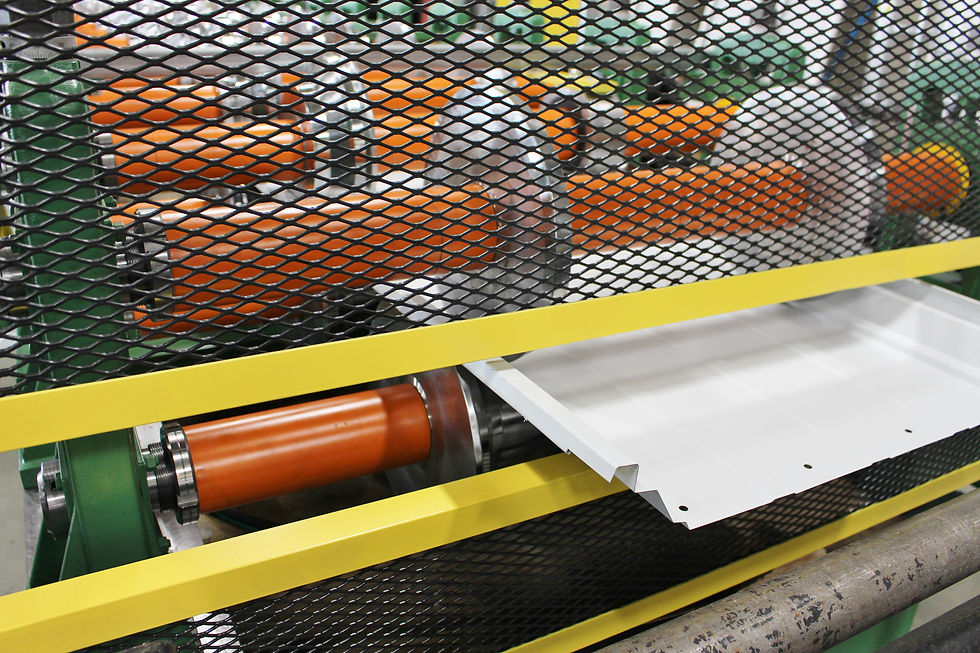
How Standing Seam Roofing Is Manufactured
Standing seam roofing begins with steel or aluminum coil.
The coil is loaded onto an uncoiler and fed into a precision rollforming machine. A series of forming rolls progressively shapes the flat metal into the finished panel profile.
Depending on the system, the line may also include:
Coil handling equipment
Leveling
Rollforming
Punching or notching
Flying or post-cut shearing
Panel measurement
Automatic stacking
Packaging equipment
The precision of the rollforming equipment is critical. Consistent panel dimensions and seam geometry are essential for proper panel engagement and installation.
For manufacturers producing standing seam roofing, a reliable rollforming line can therefore have a direct impact on product quality, production efficiency, and overall profitability.
The Future of Metal Roofing
As building owners increasingly look at the long-term value of their roofing systems, standing seam metal roofing continues to be an attractive alternative to traditional exposed fastener systems.
Exposed fastener roofing will remain an important and cost-effective solution for many applications. But when appearance, concealed fastening, durability, and long-term performance are priorities, standing seam offers significant advantages.
For manufacturers, producing these higher-performance roofing systems requires equally capable manufacturing equipment.
ASC Machine Tools has been designing and manufacturing rollforming machinery in the United States since 1949, providing equipment for the production of metal roofing panels, purlins, decking, trim, and other metal construction products.
From coil handling and rollforming to cutting and automated stacking, the right equipment helps manufacturers produce consistent, high-quality metal roofing efficiently and reliably.


Comments